As an Amazon Associate, we earn from qualifying purchases. Some links on this site are affiliate links at no extra cost to you. Our recommendations are based on thorough research and editorial judgment.

10 Pro Tips To Fix Your Damaged Hair

To repair damaged hair, start with a thorough damage assessment – look for split ends, tangles, and dull texture. Deep condition weekly with keratin-rich masks, and embrace heat-free styling methods like braiding or flexi-rods. Switch to a silk pillowcase to prevent friction damage while you sleep, and trim those ends every 6-8 weeks. Boost repair from within through a nutrient-rich diet packed with proteins and omega-3s. Master gentle detangling techniques, always working from ends to roots. Shield your strands from UV rays and pollution, and incorporate natural oils like coconut and argan. These proven strategies are just the beginning of your hair transformation journey.
Key Takeaways
- Deep condition weekly with keratin-rich masks, using a warm towel to enhance penetration and restore moisture to damaged strands.
- Use gentle detangling techniques with a wide-tooth comb and leave-in conditioner, working from ends to roots.
- Incorporate bond-building treatments into your routine, which can improve hair quality by 74% after three applications.
- Protect hair while sleeping using silk pillowcases and caps to reduce friction and maintain moisture levels.
- Apply natural oils like coconut pre-wash to reduce protein loss and argan oil to enhance elasticity and shine.
Assess Your Hair Damage
Before diving into hair repair treatments, understanding the extent of your hair damage is essential. You'll want to assess several key indicators that can reveal just how much TLC your locks really need. Start by running your fingers through your hair – if you're noticing excessive tangles or a rough texture, that's your first clue something's not quite right.
Take a close look at your strands, particularly the ends. Split ends and brittleness are telltale signs of damage that affects about 80% of people at some point. Pay attention to how your dry hair behaves with different products, and note if it's struggling to retain moisture. If your once-shiny locks are looking dull and lifeless, that's another red flag you shouldn't ignore.
Think back to your hair's history with treatments and heat styling – frequent exposure to these can really take a toll. Keep a mental log of how your hair responds to various products and styling methods. This awareness will help you make smarter choices for healthier hair moving forward. Remember, proper assessment is your first step toward effective repair strategies. Incorporating products like Dr. Miracle's Deep Conditioner with Coconut Oil can provide essential hydration to combat dryness and breakage.
Deep Condition Weekly
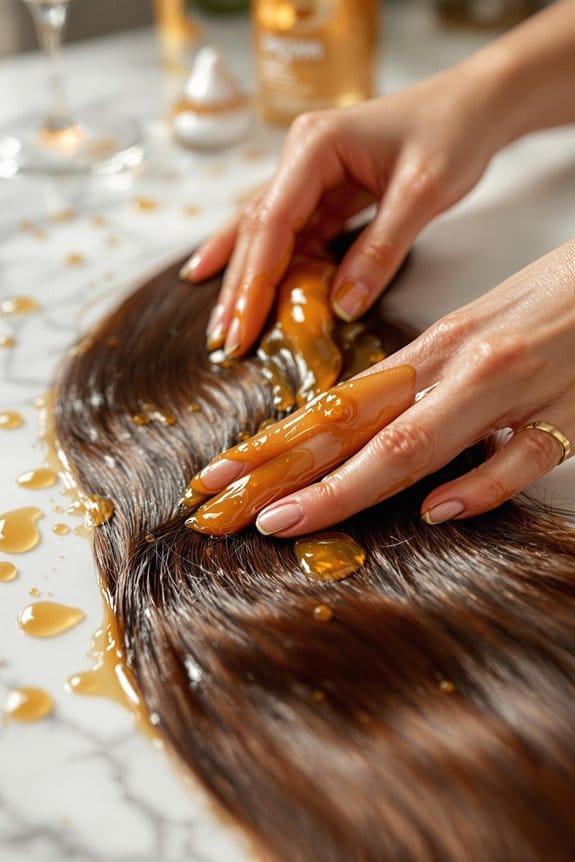
Revitalize your damaged hair with weekly deep conditioning treatments that penetrate deep into the hair shaft. If you're battling with brittle, lifeless locks, these nourishing ingredients will be your new best friend. Look for products containing keratin, argan oil, or shea butter – they're the powerhouse ingredients that'll help repair damaged hair and restore that healthy appearance you've been missing.
To get the most out of your weekly treatments, you'll want to be strategic about application. Start by leaving your deep conditioning mask on for at least 20-30 minutes – yes, it's the perfect excuse to catch up on your favorite show! Here's a pro tip: wrap your hair in a warm towel or pop on a shower cap while you wait. The heat will help enhance penetration by opening up those hair cuticles, allowing the moisture to really sink in. This simple step can make a world of difference in reducing breakage and improving elasticity. Additionally, incorporating products like PURA DOR Organic Oil can provide essential fatty acids that further nourish your hair.
Stick to this routine, and you'll notice your hair becoming progressively stronger and more manageable. Those weekly deep conditioning sessions are like sending your strands to a mini spa day – totally worth the time investment!
Recommended Products

The Gold Mask revitalizes the hair and gives it renewed youth
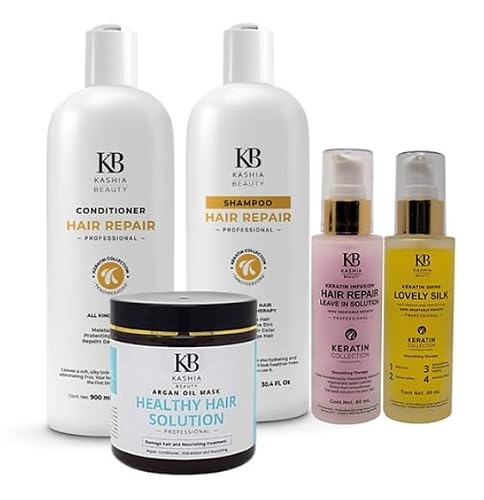
All in One Hair Repair Kit: Restore hair health and shine with this complete maintenance kit including shampoo, conditioner, hair mask, leave-in treatment, and heat protectant serum.

Deep Cleansing Shampoo (Step 1): Gently purifies hair, removing buildup and preparing strands for treatment
Choose Heat-Free Styling Methods
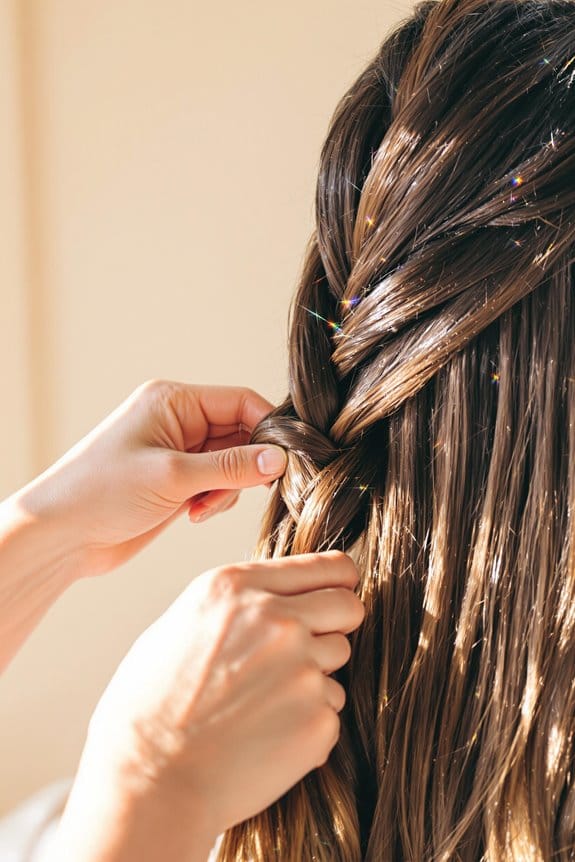
One of the most effective ways to nurse your damaged hair back to health is by ditching heat styling tools altogether. By embracing heat-free styling techniques, you'll give your strands the break they desperately need while still achieving gorgeous results.
Start by making air-drying your go-to method to reduce heat exposure. While your hair is damp, apply a quality leave-in conditioner to lock in hair hydration and provide the foundation for your style. You'd be amazed at how many stunning looks you can create without reaching for that flat iron or blow dryer. Try braiding your hair before bed for defined waves, or experiment with flexi-rods for bouncy curls that last. Incorporating a leave-in treatment can also provide moisture and heat damage protection, further enhancing your hair's health.
Protective hairstyles are another excellent option for breakage reduction. Simple techniques like twisted buns, rope braids, or pinned-up styles not only look polished but also shield your hair from daily wear and tear. For added texture and hold, use styling creams that enhance your hair's natural pattern. Once you master these heat-free alternatives, you'll wonder why you ever relied so heavily on hot tools in the first place.
Recommended Products

𝐓𝐑𝐔𝐒𝐓𝐄𝐃 𝐁𝐘 𝐒𝐀𝐋𝐎𝐍 𝐏𝐑𝐎𝐅𝐄𝐒𝐒𝐈𝐎𝐍𝐀𝐋𝐒: This salon styling station combines premium product quality with a robust design tailored for high-volume salons. It was developed and tested in professional salons for licensed experts who demand excellence.
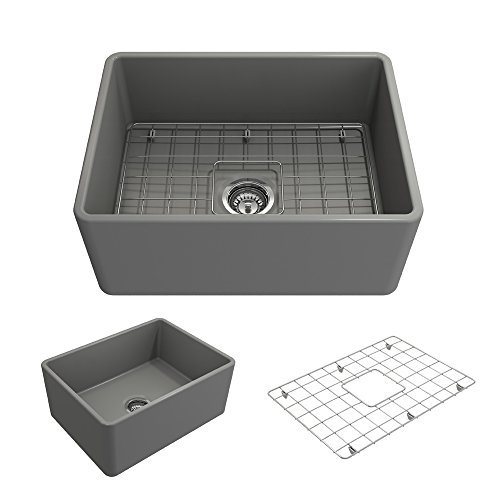
100% NATURAL and ORGANIC fine fireclay construction for an authentic and highest quality sink with unmatched durability. PROPRIETY GLAZING provides a CHIC MATTE finish and enhances the beauty and shine of the fireclay sink with a totally NON-POROUS surface for easy cleaning and protection against stains. Proudly crafted in the birthplace of fine fireclay using state-of-the-art production technology which adds a touch of MEDITERRANEAN ELEGANCE to your home while preserving the traditional art of fireclay; resulting in a FUSION of tradition and innovation, delivering a product of EXCEPTIONAL BEAUTY and DURABILITY.

𝐓𝐑𝐔𝐒𝐓𝐄𝐃 𝐁𝐘 𝐒𝐀𝐋𝐎𝐍 𝐏𝐑𝐎𝐅𝐄𝐒𝐒𝐈𝐎𝐍𝐀𝐋𝐒: This footsie pedicure spa combines premium product quality with a robust design tailored for high-volume spas and salons. It was developed and tested for licensed experts who demand excellence.
Protect During Sleep

Your nighttime hair care routine plays an essential role in preventing further damage while you sleep. One of the most effective changes you can make is switching to silk or satin pillowcases, which greatly reduce friction against your hair as you toss and turn. Unlike traditional cotton cases that can rough up your strands, these smoother materials help prevent hair breakage and minimize those pesky split ends you've been battling.
If you're serious about maintaining your hair health, don't stop at just the pillowcase. Adding a silk or satin sleep mask to your routine creates an extra barrier of protection, especially if you're dealing with curly hair or textured hair types that need special care. These materials work wonders by preserving your hair's natural moisture levels, unlike cotton which can actually steal hydration from your strands overnight. Think of it as giving your hair a protective cocoon while you rest – and who doesn't want to wake up with smoother, more manageable locks? By consistently using these protective sleep accessories, you'll notice less tangles, reduced moisture loss, and healthier-looking hair over time. Additionally, maintaining moisture with natural ingredients can further enhance the benefits of your nighttime routine.
Trim Split Ends Regularly
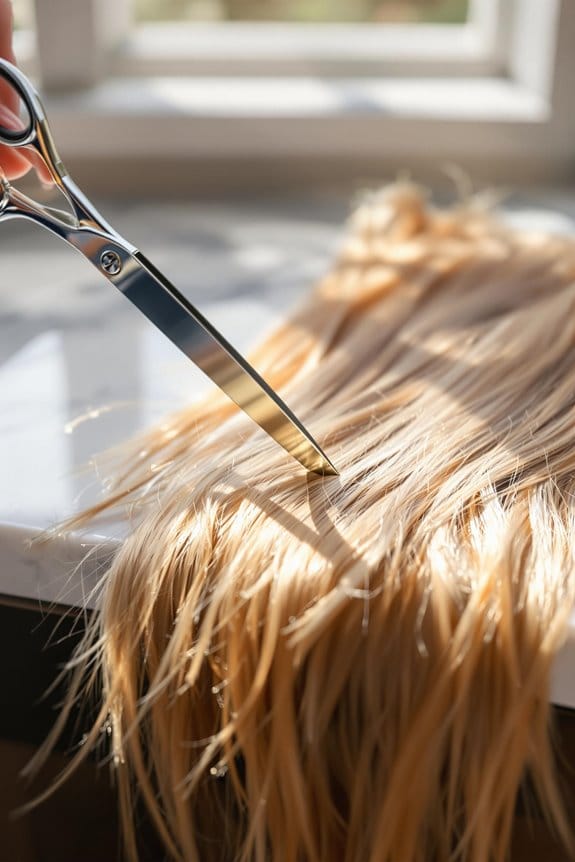
While many people try to grow their hair longer by avoiding trims altogether, regular maintenance cuts every 6-8 weeks are essential for maintaining healthy hair. You might think you're helping your hair grow by skipping trims, but you're actually setting yourself up for more damage in the long run.
When you don't address split ends promptly, the damage doesn't just stay at the tips. The splitting can actually travel up your hair shaft, compromising your hair cuticle and creating even more breakage. Think of it like a running tear in fabric – if you don't stop it early, it'll just keep going. That's why regular trims are your best defense against widespread damage.
If you're hesitant about losing length, consider asking your stylist for a "dusting" – a minimal trim that removes only the damaged portions while maintaining your overall length. This gentle maintenance approach will keep your hair healthier without sacrificing the progress you've made in growing it out. Plus, you'll notice your hair becomes more manageable, tangles less frequently, and looks smoother overall when you stay consistent with your trimming schedule.
Use Bond-Building Hair Treatments
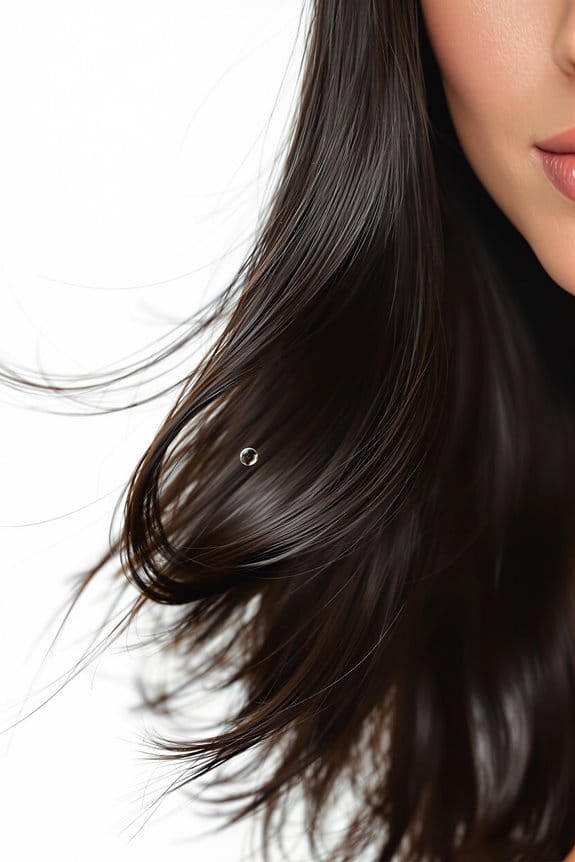
Bond-building hair treatments have emerged as a game-changing solution for repairing damaged strands at a molecular level. These innovative treatments work by targeting broken disulfide bonds in your hair structure, which are often compromised by chemical processes and heat styling tools. When you incorporate these treatments into your regular haircare routine, you'll notice a remarkable improvement in hair quality, with scientific studies showing up to 74% repair after just three applications.
To maximize the benefits of bond-building treatments, you'll want to apply them to damp hair, as this allows for better product penetration and helps restore strength to your locks. If you're someone who regularly uses flat irons, curling wands, or chemical treatments, these products are especially essential for maintaining your hair's health. The best part? You don't have to wait weeks to see results – many people notice a difference after their very first use. By making bond-building treatments a consistent part of your hair care regimen, you're not just masking damage; you're actively working to enhance overall hair health and maintain the natural elasticity of your strands.
Recommended Products

Totally Formaldehyde Free. Scroll down for more details. Bottle will serve 7-8 hair treatments

Damage Repair Conditioner for Stronger Hair: Aveda Botanical Repair Strengthening Conditioner strengthens and repairs damaged hair with the power of plants**.

BOND BUILDER PRE-WASH For hair in even the worst condition. Our pre-wash hair mask repairs and renews hair bonds from the inside out for instant and noticeably improved hair health. Hair feels soft, silky, hydrated and strong from as little as one use. Ideal for chemically processed, sensitized and damaged hair in need of repair, strength, improved elasticity and shine.
Nourish From Within
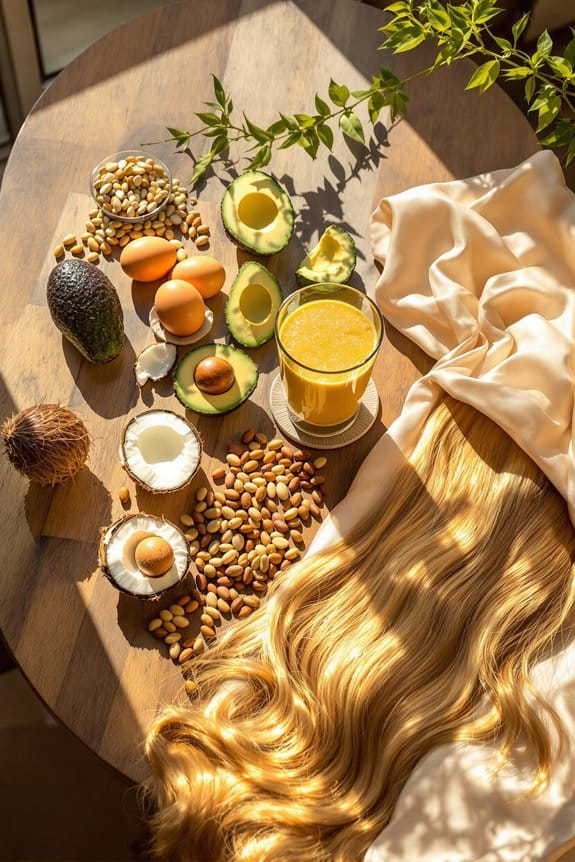
Healthy hair starts from the inside out, and what you eat plays an essential role in repairing and preventing damage. To nourish from within, you'll need to focus on a balanced diet that's rich in specific nutrients that support hair health. Think of your hair as a plant that needs the right nutrients to thrive and grow strong.
Start by incorporating plenty of proteins, which are the building blocks of healthy hair. You'll want to load up on vitamins A, C, D, and E, along with omega-3 fatty acids that support hair structure. Don't forget about hydration – drinking enough water daily keeps your hair elastic and less prone to breakage. If you're dealing with persistent hair damage, consider adding biotin supplements to your routine, as they're known to improve hair strength.
To combat oxidative stress, fill your plate with antioxidant-rich foods like spinach, walnuts, and blueberries. Pay special attention to iron and zinc intake, as nutritional deficiencies in these minerals can lead to thinning and breakage. Remember, your hair's health is a reflection of your overall nutrition, so treat your body well from the inside out.
Master Gentle Detangling Techniques
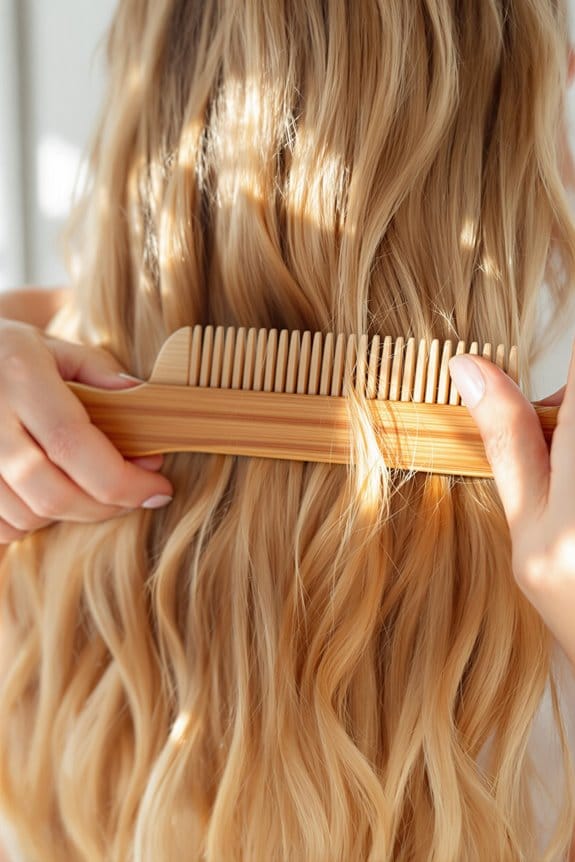
Through proper detangling techniques, you'll greatly reduce hair breakage and maintain your strands' health. The key is starting with the right tools and approach – a wide-tooth comb is your best friend when it comes to wet hair care. While it might be tempting to rush through the process, taking your time now will save you from split ends later.
Before you begin detangling, apply a leave-in conditioner to create the perfect foundation. This simple step provides essential slip, making the entire process smoother and gentler on your strands. Start at the ends of your damp hair and work your way up gradually – think of it as solving a puzzle from the bottom up. Those knots won't stand a chance when you approach them strategically!
Remember to maintain hair integrity by using gentle strokes rather than aggressive brushing. Your hair is most vulnerable when wet, so treat it like delicate silk. If you encounter stubborn tangles, hold the section above the knot while you work through it to reduce tension on your scalp. This methodical approach might take a few extra minutes, but your healthier, smoother hair will thank you.
Recommended Products

SNAG-FREE COMBS: CarbonLite’s 6pc Kit - CL1 to CL6 comb's seamless body and rounded teeth glide gently through hair without any breakage or snags. Anti-static carbon material prevents flyaways for cleaner sections and more precise, controlled cutting.

VERSATILE CURL CARE: The 4-Piece Box Set (CH-DB, CH-SB, CH-WB, CH-PC) CurlyHair curl-defining brush supports detangling, product distribution, gentle scalp care, and curl encouragement for wet and dry hair. It’s great for effortless styling, even with heat.

Large 8 Inch curly hair comb for a daily hair care. This wave comb is designed to painlessly glide through hair without pulling, preventing breakage and without scratching the scalp. Eliminate knots and tangles effortlessly from natural, thick, wavy and curly hairs.
Shield From Environmental Stressors
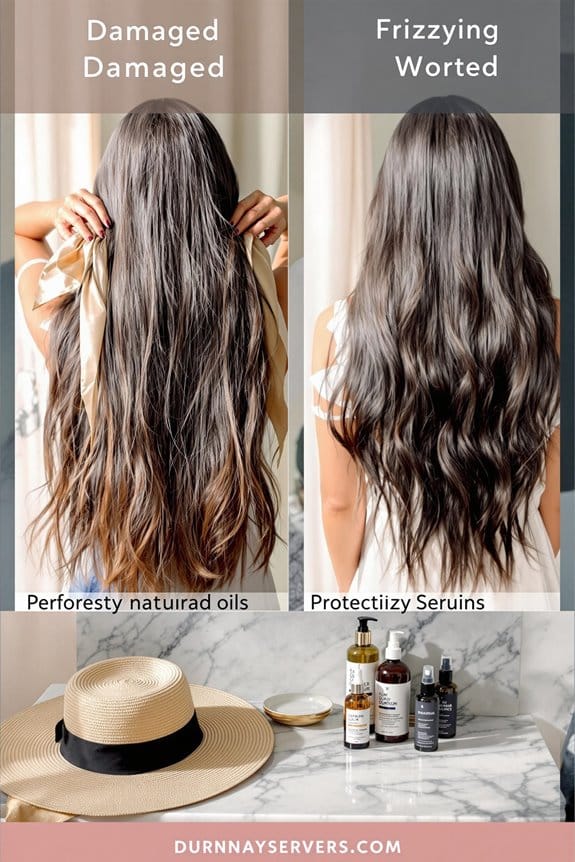
Now that you've mastered gentle detangling, your hair faces another challenge: environmental stressors that can undo all your careful handling. To protect your hair from these damaging elements, you'll need a multi-faceted approach that addresses various environmental threats.
Start by defending against UV rays, which can be surprisingly harsh on your tresses. Use hair products with built-in SPF protection, and don't shy away from stylish hats or scarves when you're out in the sun. Your hair's moisture levels need attention too – consider running a humidifier in your home to maintain ideal hydration and keep frizz at bay. When it comes to environmental pollutants, regular cleansing with specialized products will remove buildup that can make your hair look dull and lifeless.
Don't forget about antioxidant-rich hair products, which help combat oxidative stress and keep your strands strong. If you're a swimmer, protective hairstyles and swim caps are your best friends against chlorine damage. Even if you're not hitting the pool, these strategies help shield your hair from daily environmental challenges that could compromise its health and appearance.
Strengthen With Natural Oils
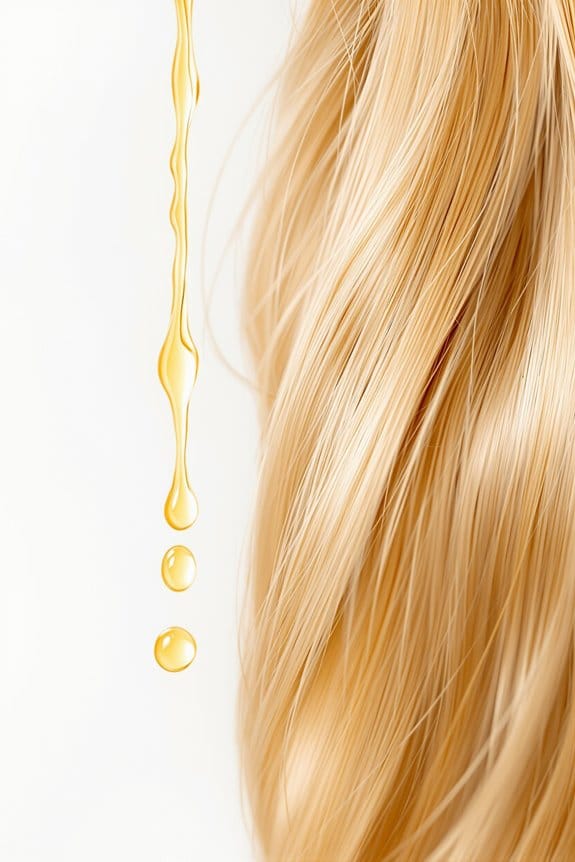
Along with proper care techniques, natural oils serve as powerful allies in your hair restoration journey. When you're dealing with damaged strands, incorporating these potent ingredients can make a significant difference in your hair's health and appearance.
Coconut oil stands out as a superstar treatment, reducing protein loss by up to 39% when you apply it before washing your hair. It penetrates deep into the hair shaft, offering protection that other products simply can't match. You'll want to pair this with argan oil, nature's answer to breakage and dullness. Its impressive vitamin E content helps maintain your hair's elasticity while adding that sought-after shine we all love.
To maximize these benefits, try adding a few drops of these natural oils to your leave-in conditioner. Your hair will thank you for the extra hydration and essential nutrients. For best results, focus on your scalp too – it's where healthy hair begins. By massaging these oils into your roots, you're not just improving moisture retention; you're creating an ideal environment for stronger, healthier growth. Who knew repair could be this natural and effective?
Recommended Products

New look, same great formula; packaging may vary

Includes Pre-treatment Clarifying Shampoo, Hair Treatment, Daily Shampoo, Daily Conditioner that will serve up to 7-8 average hair treatments

Bulk Size, Amazing Value – Organic Argan Oil 128oz Bulk Wholesale Gallon Size. Now you get our premium certified organic argan oil, at a great value for all your DIY Beauty needs.
Frequently Asked Questions
How to Fix Really Damaged Hair?
Use protein treatments and moisturizing products weekly, protect from heat, maintain scalp health, get regular trims, and follow gentle cleansing routines. You'll see improvement in your damaged hair with consistent hair care.
How Can I Bring My Damaged Hair Back to Life?
You'll revive damaged hair through regular deep conditioning, protein treatments, and hair oils. Protect from heat, maintain scalp health, and trim regularly. Daily moisturizing routines with natural remedies will restore your hair's essence.
Can Damaged Hair Be Reversed?
Yes, you can partially reverse damaged hair through proper hair care, including protein treatments, hair masks, and natural oils. Focus on moisture retention, heat protection, scalp health, and regular trims while making healthy lifestyle changes.
How Can I Regrow My Damaged Hair?
Like a garden needs nurturing, your hair needs consistent care. Focus on scalp health, use nourishing oils, apply protein treatments, maintain regular trims, and protect from heat while staying hydrated for ideal regrowth.